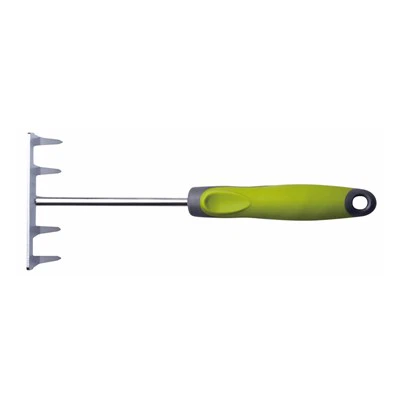
As a supplier of grass rakes, I understand the importance of ensuring the strength and durability of our products. A reliable grass rake is essential for efficient lawn maintenance, whether it's for clearing leaves, debris, or preparing the soil. In this blog post, I'll share the methods I use to test the strength of a grass rake, providing you with insights into the quality control processes we implement to deliver top-notch products.
Understanding the Components of a Grass Rake
Before diving into the testing procedures, it's crucial to understand the key components of a grass rake. A typical grass rake consists of a handle, a rake head, and tines. The handle is usually made of wood, fiberglass, or metal, providing the user with a grip and leverage. The rake head, which can be made of metal or plastic, holds the tines in place. The tines, which are the prongs of the rake, come in various materials such as metal, wire, or plastic, and are designed to collect and move grass, leaves, and other debris.
Testing the Handle
The handle of a grass rake plays a vital role in its overall strength and usability. A weak or poorly constructed handle can lead to discomfort, reduced control, and even breakage during use. To test the strength of the handle, I follow these steps:
Visual Inspection
I start by visually inspecting the handle for any signs of damage, such as cracks, splinters, or warping. A damaged handle can compromise the rake's integrity and pose a safety risk to the user. If I notice any issues, I reject the rake and have it replaced or repaired.
Bend Test
Next, I perform a bend test on the handle to assess its flexibility and durability. I hold the handle firmly at one end and apply gentle pressure to the other end, bending it slightly. A high-quality handle should be able to withstand this pressure without breaking or cracking. If the handle bends too easily or shows signs of damage, it may not be strong enough for regular use.
Load Test
To simulate real-world conditions, I conduct a load test on the handle. I attach a weight to the end of the handle and gradually increase the weight until the handle reaches its maximum capacity. This test helps me determine the handle's strength and ensures that it can withstand the force exerted during normal raking operations.
Testing the Rake Head
The rake head is another critical component of a grass rake, as it holds the tines in place and provides the necessary support for collecting and moving debris. To test the strength of the rake head, I use the following methods:
Impact Test
I subject the rake head to an impact test to evaluate its resistance to damage. I drop the rake from a specific height onto a hard surface, such as concrete or asphalt. A strong rake head should be able to withstand this impact without cracking or breaking. If the rake head shows any signs of damage after the impact test, it is considered defective and is not suitable for sale.
Torsion Test
In addition to the impact test, I perform a torsion test on the rake head to assess its ability to withstand twisting forces. I hold the rake head firmly at one end and apply a twisting motion to the other end. A high-quality rake head should be able to resist this torsion without deforming or breaking. If the rake head twists or bends easily, it may not be strong enough to handle heavy raking tasks.
Weld Test
For rakes with welded rake heads, I conduct a weld test to ensure the integrity of the welds. I use a magnifying glass to inspect the welds for any signs of cracks, porosity, or incomplete fusion. A strong weld should be smooth, uniform, and free of defects. If I notice any issues with the welds, I have the rake head repaired or replaced.
Testing the Tines
The tines are the most important part of a grass rake, as they are responsible for collecting and moving debris. A weak or poorly constructed tine can lead to reduced efficiency, increased wear and tear, and even damage to the lawn. To test the strength of the tines, I follow these steps:


Pull Test
I perform a pull test on the tines to evaluate their resistance to pulling forces. I attach a weight to the end of a tine and gradually increase the weight until the tine is pulled out of the rake head. A strong tine should be able to withstand this pulling force without breaking or detaching from the rake head. If the tine breaks or pulls out easily, it may not be strong enough for regular use.
Bend Test
Similar to the handle bend test, I conduct a bend test on the tines to assess their flexibility and durability. I hold the tine firmly at one end and apply gentle pressure to the other end, bending it slightly. A high-quality tine should be able to withstand this pressure without breaking or cracking. If the tine bends too easily or shows signs of damage, it may not be strong enough for heavy raking tasks.
Abrasion Test
To simulate the wear and tear that the tines may experience during use, I conduct an abrasion test. I rub the tines against a rough surface, such as sandpaper or concrete, for a specified period of time. A strong tine should be able to resist abrasion and maintain its shape and integrity. If the tines show signs of excessive wear or damage after the abrasion test, they may not be suitable for long-term use.
Conclusion
Testing the strength of a grass rake is a crucial step in ensuring the quality and durability of our products. By following these testing procedures, I can identify any potential issues with the handle, rake head, or tines and take the necessary steps to address them before the rakes are sold to customers. At our company, we are committed to providing our customers with high-quality grass rakes that are built to last. If you're in the market for a reliable grass rake, Metal Rake Head, Adjustable Garden Leaf Rake, and Wire Garden Rakes are some of our top-selling products. We invite you to contact us to discuss your specific needs and explore our range of grass rakes. Our team of experts is ready to assist you in finding the perfect rake for your lawn maintenance tasks.
References
- "Testing and Evaluation of Garden Tools." Journal of Agricultural Engineering Research.
- "Materials Science and Engineering: An Introduction." William D. Callister Jr. and David G. Rethwisch.
- "The Complete Guide to Lawn Care." Jeff Gillman.