The vibration of a cutting tool is a crucial factor that significantly impacts its performance, efficiency, and the quality of the cut. As a cutting tools supplier, I've witnessed firsthand how understanding and managing tool vibration can make a world of difference in various applications. In this blog, we'll delve into the intricacies of how vibration affects cutting tool performance and explore ways to mitigate its negative impacts.
The Basics of Cutting Tool Vibration
Cutting tool vibration can be categorized into two main types: forced vibration and self - excited vibration. Forced vibration is typically caused by external factors such as the rotation of the spindle, unbalanced components in the machine, or irregularities in the workpiece material. Self - excited vibration, on the other hand, occurs due to the interaction between the cutting tool and the workpiece during the cutting process. This type of vibration is often more difficult to predict and control.
When a cutting tool vibrates, it creates fluctuations in the cutting force. These fluctuations can lead to uneven wear on the tool's cutting edge. For example, in a turning operation, excessive vibration can cause the cutting edge to chip or break prematurely. This not only reduces the tool's lifespan but also affects the surface finish of the workpiece. A rough surface finish may require additional post - processing steps, increasing production time and cost.
Impact on Tool Life
One of the most significant effects of cutting tool vibration is its impact on tool life. Vibration increases the stress on the cutting edge, which can accelerate wear and tear. High - frequency vibrations can cause microscopic cracks to form on the tool surface. Over time, these cracks can propagate and lead to catastrophic failure of the tool.
For instance, in milling operations, if the cutter experiences excessive vibration, the teeth of the cutter may wear unevenly. This uneven wear can cause the cutter to become unbalanced, further exacerbating the vibration problem. As a result, the tool may need to be replaced more frequently, increasing the overall cost of production.
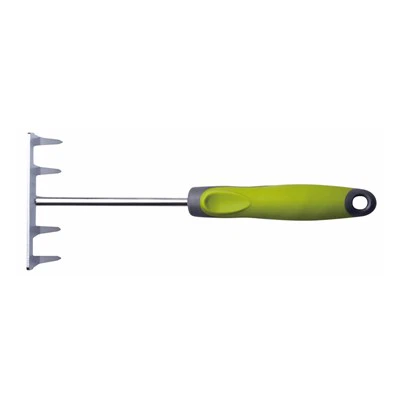
We offer a wide range of cutting tools, such as the Weeder Hoe Tool, which are designed to minimize vibration and ensure long - lasting performance. Our engineers use advanced materials and manufacturing techniques to reduce the susceptibility of our tools to vibration - induced damage.
Influence on Surface Finish
The quality of the surface finish is a critical factor in many manufacturing processes. Vibration can have a detrimental effect on the surface finish of the workpiece. When a cutting tool vibrates, it creates irregularities on the machined surface. These irregularities can be in the form of waviness, chatter marks, or rough spots.
In precision machining applications, such as the production of aerospace components or medical devices, a poor surface finish can compromise the functionality of the part. For example, a rough surface on a bearing can lead to increased friction and reduced efficiency. To achieve a high - quality surface finish, it is essential to minimize cutting tool vibration.


Our Spring Loaded Pruning Shears are engineered to provide a smooth cutting action with minimal vibration. This ensures that the branches are cut cleanly, leaving a smooth surface that promotes healthy regrowth.
Effects on Cutting Accuracy
Cutting accuracy is another aspect that is affected by tool vibration. Vibration can cause the cutting tool to deviate from its intended path, resulting in dimensional errors in the workpiece. In high - precision machining, even small deviations can lead to parts that do not meet the required specifications.
For example, in the production of gears, a slight dimensional error due to vibration can cause noise, reduced efficiency, and premature wear in the gear system. To maintain cutting accuracy, it is necessary to control the vibration of the cutting tool. Our lightweight and well - balanced tools, like the Lightweight Hedge Shears, are designed to provide precise cutting with minimal vibration, ensuring accurate and consistent results.
Mitigating the Effects of Vibration
There are several strategies that can be employed to mitigate the effects of cutting tool vibration. One approach is to optimize the cutting parameters, such as cutting speed, feed rate, and depth of cut. By selecting the appropriate cutting parameters, it is possible to reduce the cutting force and minimize vibration.
Another method is to use vibration - damping devices. These devices can be attached to the cutting tool or the machine tool to absorb and dissipate the vibration energy. For example, some cutting tools are equipped with internal damping mechanisms that help to reduce vibration.
Proper tool selection is also crucial. Different cutting tools are designed for specific applications, and choosing the right tool for the job can significantly reduce vibration. Our team of experts can provide guidance on tool selection based on your specific requirements, ensuring that you get the best performance from your cutting tools.
Conclusion
In conclusion, the vibration of a cutting tool has a profound impact on its performance, tool life, surface finish, and cutting accuracy. As a cutting tools supplier, we understand the importance of minimizing vibration to ensure the best results for our customers. Our extensive range of cutting tools, including the Weeder Hoe Tool, Spring Loaded Pruning Shears, and Lightweight Hedge Shears, are designed to minimize vibration and provide optimal performance.
If you are looking for high - quality cutting tools that can deliver excellent results with minimal vibration, we invite you to contact us for a detailed discussion about your needs. Our team is ready to assist you in selecting the right tools for your applications and provide you with the support you need to achieve the best possible performance.
References
- Altintas, Y. (2000). Manufacturing Automation: Metal Cutting Mechanics, Machine Tool Vibrations, and CNC Design. Cambridge University Press.
- Byrne, G., et al. (2003). Tool Condition Monitoring: A Review of the Past 20 Years and Future Perspectives. International Journal of Machine Tools and Manufacture, 43(10), 987 - 1012.
- König, W., & Wittmann, M. (1989). Vibration Damping in Machine Tools. Annals of the CIRP, 38(1), 41 - 44.