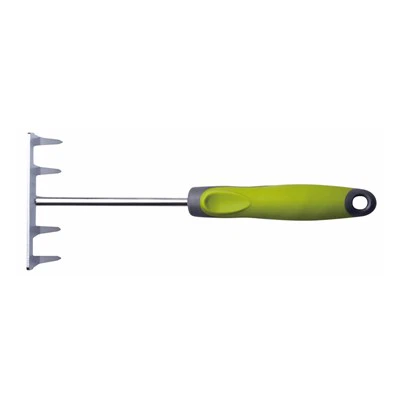
Hey there! As a supplier of Machete Garden Tools, I'm super excited to dive into the topic of "What is the tang design of a machete garden tool?" It might seem like a technical detail, but trust me, it's a game - changer when it comes to the performance and durability of these essential gardening tools.
Let's start with the basics. The tang is that part of the blade that extends into the handle of the machete. It's like the backbone of the tool, providing stability and strength. There are different types of tang designs, and each has its own set of pros and cons.
One of the most common tang designs is the full tang. A full tang machete has a blade that runs the entire length of the handle. This means that the metal of the blade extends from the tip all the way to the end of the handle. It's like having a solid piece of metal throughout the whole tool. This design offers incredible strength and durability. When you're using your machete to hack through thick bushes or chop down small branches in your garden, a full - tang machete can take a beating. It won't break or come apart easily because the connection between the blade and the handle is so strong.
Another advantage of the full tang is balance. Since the weight is distributed more evenly along the length of the tool, it's easier to control. You can swing the machete with more precision, which is crucial when you're trying to make clean cuts in your garden. If you're looking for a reliable and long - lasting machete, a full - tang design is definitely a great choice. You can check out our Machete Garden Tool options that feature full - tang designs for top - notch performance.


On the other hand, there's the partial tang. A partial tang machete has a blade that only extends partway into the handle. This design is often used to save on materials, which can make the machete a bit more affordable. However, it comes with some drawbacks. Partial - tang machetes are generally not as strong as full - tang ones. The connection between the blade and the handle is weaker, so there's a higher risk of the blade coming loose or breaking off over time, especially if you use the machete for heavy - duty tasks.
The balance of a partial - tang machete can also be a bit off. Since the weight is concentrated more towards the blade, it can be harder to control, especially for beginners. But if you're just using the machete for light pruning or trimming in your garden, a partial - tang machete might be sufficient. Just keep in mind that it might not last as long as a full - tang one.
There's also the rat - tail tang. This is a thin, rod - like extension of the blade that goes into the handle. Rat - tail tangs are the weakest of the three types. They're often found in cheaper machetes, and they're really only suitable for very light tasks. The thin tang can easily bend or break, and the machete might not be able to handle much pressure.
Now, let's talk about how the tang design affects the overall quality of the machete. A well - designed tang is essential for a high - quality machete. It ensures that the blade and the handle work together as a single unit. When the tang is properly designed and constructed, the machete will be more reliable, easier to use, and will last longer.
For example, if the tang is not properly secured in the handle, it can cause the handle to loosen or wobble. This not only makes the machete less effective but also poses a safety risk. You don't want the blade to come loose while you're using it!
When choosing a machete, it's important to consider the tang design along with other factors like the blade material and the type of handle. The blade material should be strong and sharp, and the handle should be comfortable to hold. A good combination of these elements will give you a machete that's perfect for your gardening needs.
If you're into camping as well as gardening, you might also be interested in our Good Camping Axe. It has a similar focus on quality design, including a well - thought - out tang for the blade.
As a supplier, we understand the importance of providing high - quality machete garden tools. That's why we carefully select and test our products to make sure they meet the highest standards. Whether you're a professional gardener or just someone who loves to tend to their backyard, we have the right machete for you.
We're always looking to connect with customers who are interested in our products. If you're thinking about purchasing a machete garden tool, we'd love to have a chat with you. Whether you have questions about the tang design, the blade material, or anything else, our team is here to help. We can guide you through the selection process and make sure you get the perfect machete for your specific needs. So, don't hesitate to reach out and start a conversation about your machete requirements.
In conclusion, the tang design of a machete garden tool is a crucial factor that affects its strength, balance, and overall performance. Full - tang designs offer the best combination of durability and control, while partial - tang and rat - tail tang designs have their own uses but are generally less robust. When choosing a machete, make sure to consider the tang design along with other important features. And if you're in the market for a high - quality machete, we're here to assist you every step of the way.
References
- "The Art of Machete Making" - A guidebook on machete construction and design
- Gardening Tool Reviews - Various online reviews discussing the performance of different machete designs