


Hey there, fellow gardeners and tree enthusiasts! As a supplier of lopping shears, I often get asked about how these nifty tools actually work. So, I thought I'd take a few minutes to break it down for you in a way that's easy to understand.
Let's start with the basics. Lopping shears, also known as loppers, are used for cutting through thick branches and stems that are too big for pruning shears but not quite large enough for a saw. They come in various shapes and sizes, but the most common types are bypass and anvil loppers.
Bypass Loppers
Bypass loppers work a bit like a pair of scissors. They have two blades that pass by each other when you squeeze the handles. One blade is sharp and curved, while the other is flat and acts as a counter - edge. When you close the handles, the sharp blade slices through the branch, much like a knife cutting through food.
The advantage of bypass loppers is that they make a clean cut. This is really important because a clean cut helps the plant heal faster and reduces the risk of disease. They're great for cutting live branches, especially those that are green and flexible.
Anvil Loppers
Anvil loppers, on the other hand, have a single sharp blade that comes down onto a flat anvil. When you squeeze the handles, the blade presses the branch against the anvil, cutting it. Anvil loppers are generally better for cutting dead or dry branches. They can handle thicker and tougher branches because the anvil provides a solid surface for the blade to work against.
But here's the thing, anvil loppers don't always make as clean a cut as bypass loppers. The pressure of the blade against the anvil can sometimes crush the fibers of the branch, which might not be ideal for live plants.
The Mechanics of Cutting
Now, let's talk about how the actual cutting force is generated. When you squeeze the handles of the lopping shears, you're applying a force. This force is then transferred to the blades. The longer the handles of the loppers, the more leverage you get. Leverage is like a multiplier of your force. So, if you have a pair of loppers with long handles, you can cut through thicker branches with less effort.
For example, if you're trying to cut a 1 - inch thick branch with a pair of loppers that have short handles, you might have to really bear down hard. But if you use a pair with long handles, you can use less muscle power to achieve the same result.
Geared and Ratchet Systems
Some of our lopping shears come with special features to make cutting even easier. Take our Geared Tree Loppers for example. These loppers have a gear system that amplifies the force you apply. When you squeeze the handles, the gears transfer and multiply the force to the blades. This means you can cut through thicker branches with a lot less effort.
Another cool type is our Power Gear Loppers. They use a similar principle but with a different gear design. The power gear system is optimized to give you maximum cutting power, making it perfect for those really tough jobs.
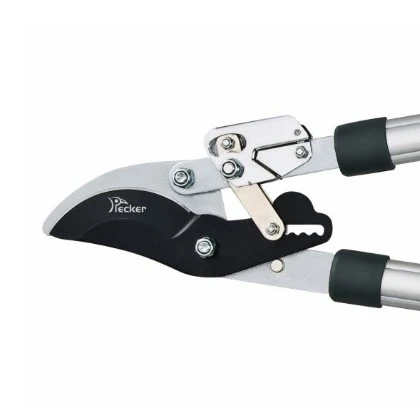
Then there are our Ratchet Bypass Lopper. These loppers have a ratchet mechanism. Instead of having to cut through the branch in one go, you can make a series of small cuts. Each time you squeeze the handles and release, the ratchet holds the position, allowing you to gradually cut through the branch. This is great if you don't have a lot of strength or if you're cutting a very thick branch.
Maintenance
To keep your lopping shears working well, you need to take good care of them. First of all, keep the blades sharp. A dull blade will make cutting harder and might not give you a clean cut. You can use a file or a sharpening stone to sharpen the blades. Just make sure to follow the original bevel of the blade.
Also, keep the moving parts lubricated. This helps the shears operate smoothly. You can use a light machine oil or a special lubricant for gardening tools. And after each use, wipe the blades clean to remove any dirt, sap, or debris.
Choosing the Right Loppers
When it comes to choosing the right loppers for your needs, there are a few things to consider. First, think about the size of the branches you'll be cutting. If you're mostly dealing with small to medium - sized branches, a pair of bypass loppers with medium - length handles might be enough. But if you have to cut thick, tough branches, you might want to go for a pair with long handles and a geared or ratchet system.
Another thing to consider is your own strength. If you're not very strong, a pair of loppers with a ratchet mechanism or a gear system will make your job a lot easier.
Conclusion
So, there you have it! That's how lopping shears work. Whether you're a professional arborist or just a weekend gardener, having a good understanding of how these tools work can help you choose the right one and use it more effectively.
If you're interested in our range of lopping shears, we'd love to hear from you. Whether you're looking for a single pair for your home garden or a bulk order for a landscaping business, we can help. Just reach out to us, and we'll be happy to discuss your requirements and get you the best lopping shears for the job.
References
- "Gardening Tools Handbook" by Gardening Experts Publishing
- Various product manuals from our lopping shears' manufacturers


